The last mile is not the same everywhere
The literature on delivery was written in cities where streets have names, numbers run in order, and
a GPS pin is enough. Bamako, Dakar and Yaoundé do not work that way, and software that assumes
otherwise fails quietly: the rider circles, the food cools, and the customer concludes the restaurant
is bad.
An address here is a description
A customer does not say "14 Acacia Street". They say "behind the filling station, the blue door, ask
for Aminata". That is a perfectly good address, and it beats a GPS pin dropped 80 metres away. So our
order screens keep both: the coordinates when they exist, and the sentence the customer actually
wrote, unedited.
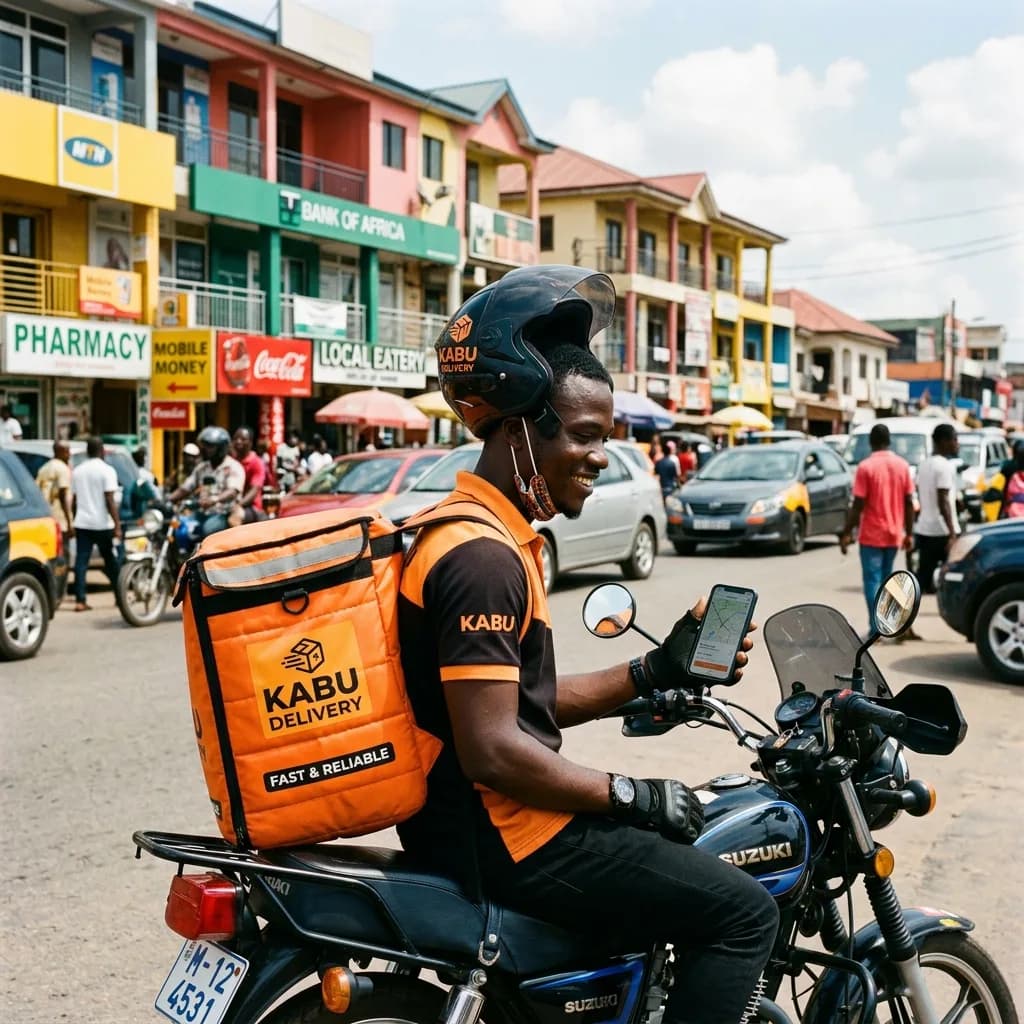
The rider knows the neighbourhood better than the map
The best route on a wet afternoon is not the one a server calculates. We suggest a route, we do not
impose one, and a deviation is never counted against anybody.
What we actually measure
Three numbers decide whether a delivery service is any good, and none of them is the order count:
- the time between the kitchen accepting and the rider collecting, which says whether food is sitting,
- the time between collection and handover, which says whether the route was well chosen,
- the share of orders handed over without a single phone call, which says whether the address was clear.
The third is the one nobody publishes, and it is the most honest. A delivery that took 3 phone calls
cost everyone time, even if it arrived on schedule.
Investing in people rather than in the algorithm
A dispatch engine can save 2 minutes. A rider who has worked the same zone for 3 years saves 10, and
knows which gate is still open after 8pm. We train, we equip, and we pay per trip rather than per
minute, because paying per minute encourages precisely what nobody wants on a wet road.